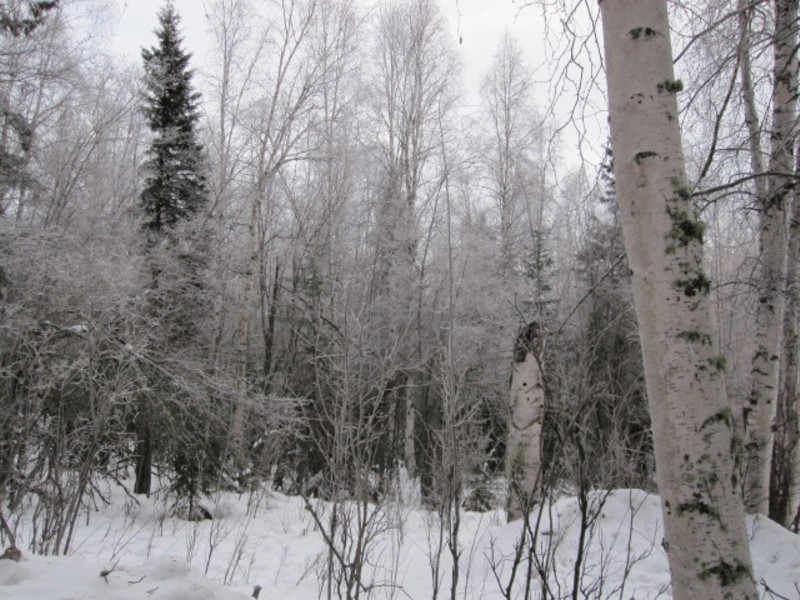
The temperature at solar noon, when I took these images, was 11 F (-12 C). The sun rose today at 9:40 am and will set at 4:31 pm for a total day length of 6 hours 52 minutes, which is almost 3 hours more than a month ago on 1 January.
January was unusually warm - it seems to be the trend this winter - and last week at this time our temperatures were at freezing or just above. On 23 January we even had several hours of rain, which caused the roads to become dangerously slippery and the local schools were canceled the next day. That makes 4 days so far this school year when school was canceled due to rain! Those days need to be made up (federal regulations require at least 180 teaching days in a school year otherwise the district cannot receive any federal support for programs such as free lunches for poor children, etc) and so the school year will probably be extended into late May or June.
25 years ago it was 1989. Interior Alaska had just gone through one of the coldest Januarys on record. The Exxon Valdez fiasco, spewing crude oil all over Prince William Sound, would not happen for several more weeks. For the previous 3 weeks the temperatures in the Fairbanks area hovered in the -40 F range (or -40 C, since they are the same at this point), many times dipping lower - hard to say since thermometers don't work so well when it is this cold. We had wrapped our propane tank and a light bulb with a sleeping bag to keep it from freezing. Small airlines were grounded and unable to fly supplies out to Interior villages, not due to the cold but because the air pressure was so high altimeters could not be trusted. If you did mange to get your car started you'd see the streets littered with black "snakes": broken fan belts from less fortunate drivers. The Fairbanks school district finally closed schools since the ice fog was so thick bus drivers couldn't see kids waiting to be picked up and so they refused to drive. And then 1 February arrived - and it miraculously warmed up...to -30 F. What a relief!